Let’s go on with the trip to explore Todai-ji Temple~~
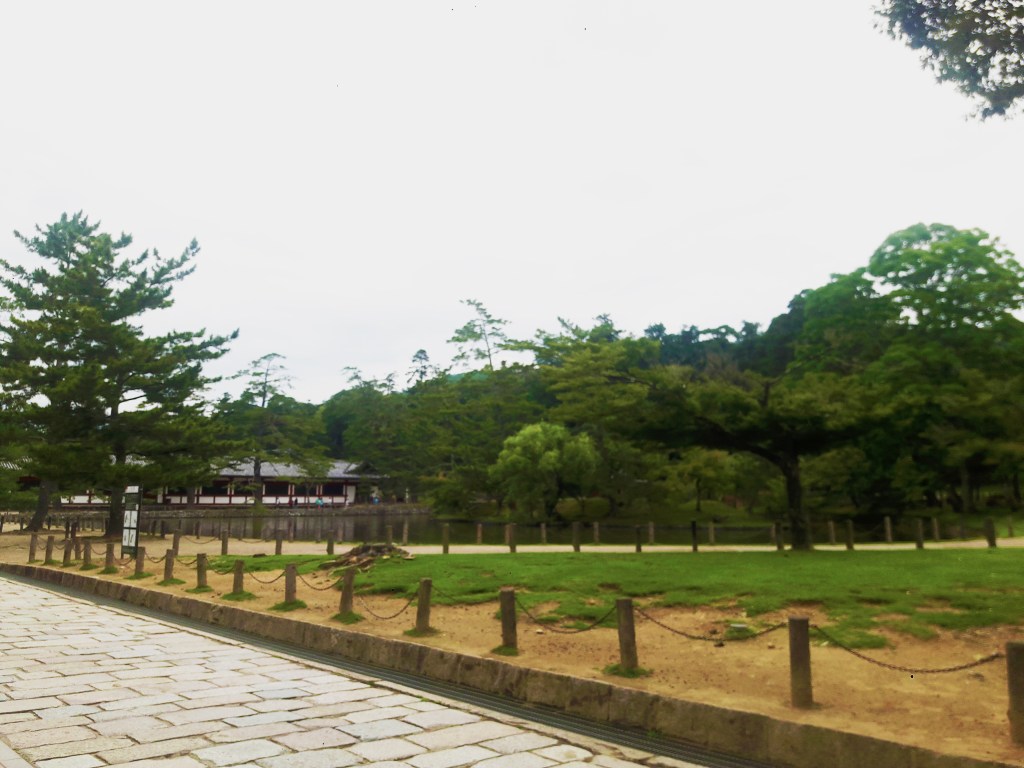
As far as I know, the construction process was really arduous: it was built over and over again with different sizes due to natural disasters, fire and wars. We were given the sketches demonstrated for the previous versions of the main building.
And this is the current main hall:

The original version was bigger than its successors. However, this latest version is still remaining the largest wooden building in the world (up till now).
One the right hand side, there is a fountain for purification before entering the main hall.

This experience was quite new to me because it was the first time I had ever undergone the purification ritual before coming inside a worshiping place.
There are several ladles, and visitors are supposed to take fresh water provided to wash their hands (or maybe face/mouth – I don’t remember this detail, so I’m not sure whether we should clear our face/mouth or not). But I’m 100% certain about the rinsing hands. I should have taken note of this process thoroughly last summer, right after the trip -.-
There’re some steps of cleaning the hands that I still remember. First, we wash one hand with another hand holding and pouring the water out from the ladle. To wash the holding hand, we just have pour it vertically to the hand itself. It was so exciting to experience such new ritual, allowing me to gain more knowledge about other culture.
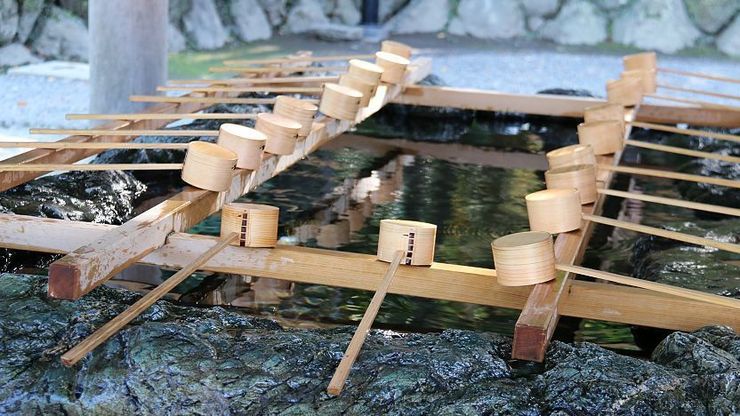
The ladles. (Source: Japan Guide)
And here is another outstanding feature at Todai-ji Temple:
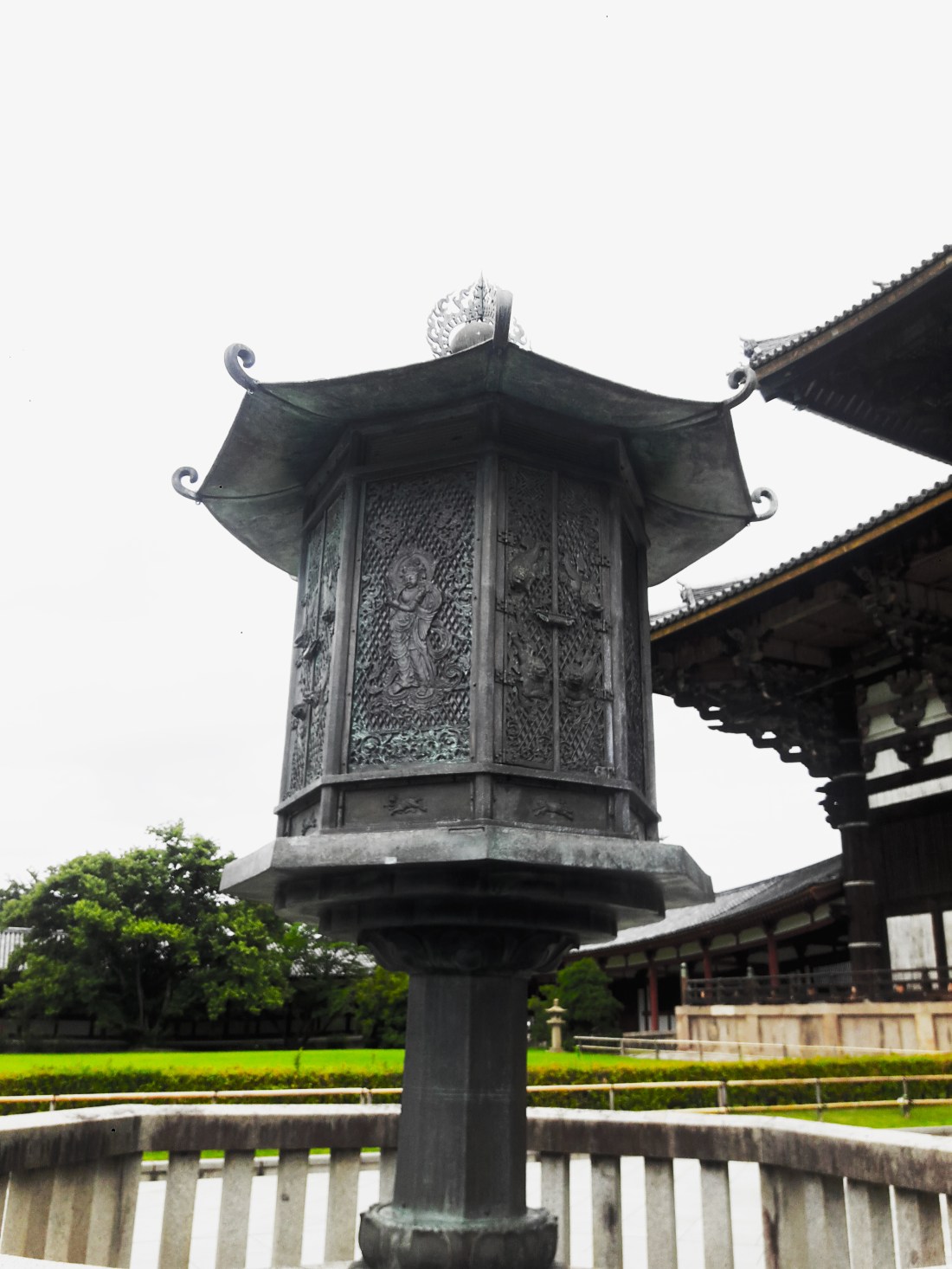
In order not to capture the other visitors in my photo, I had to take it from this angle.
“The Octagonal Lantern in front of the Great Buddha Hall dates from the time of the founding of Tōdai-ji. The distinctive large fire chamber is covered with a sloping roof surmounted by a jewel-like form. It rests upon a stone base supported by a stone post emanating from a lotiform pedestal. The eight panels of the fire chamber are grilles of diamond shapes. The four stationary panels are ornamented with celestial musicians while the four pairs of hinged doors are decorated with lions running across clouds. The conception of the celestial musicians is particularly wonderful with their lithe poses, well-realized foreshortening of their chests and their hands that hold instruments, and the movement of the scarves caught by the wind. The post bears an excerpt from a Buddhist text extolling the merits of lighting lanterns.”
(Source: Todai-ji Temple)
Let’s take some steps closer and look up, this is what we can see:
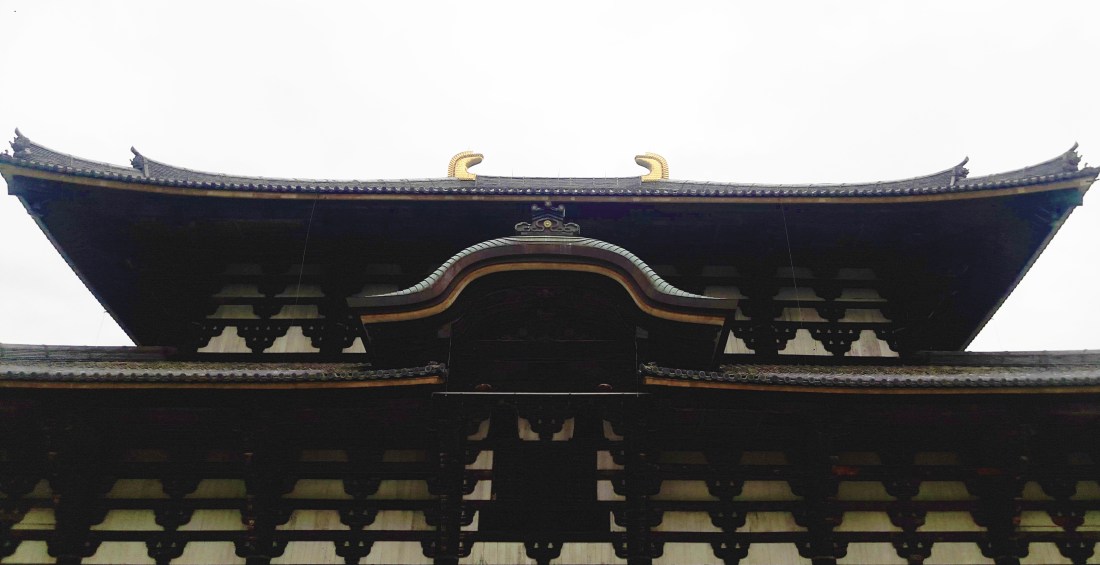
AMAZING FACT:
Can you spot the golden patterns looking like fishtails on top of the roof? Since the building was destroyed twice by fire, people believed that this kind of decoration would protect the structure from disastrous flame (fishtail –> water –> extinguish fire –> logic!)
Here is the Great Buddha (Daibutsu) in the main hall:
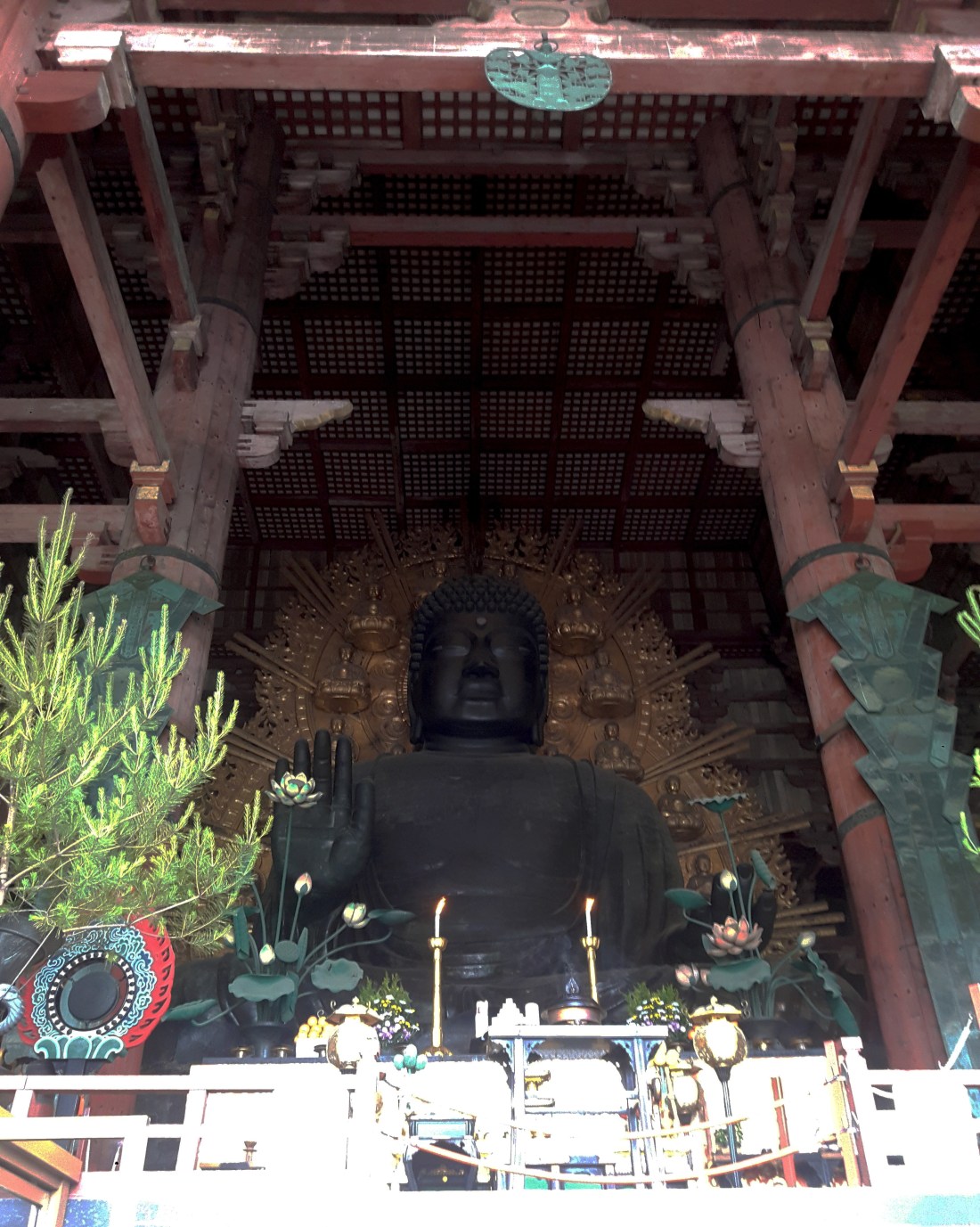
I don’t remember the detail figures, but in general, this Buddha statue is tremendously big and it was cast out of bronze.
Additionally, there’re some different and smaller Buddha statues inside the main hall, and here is an example:
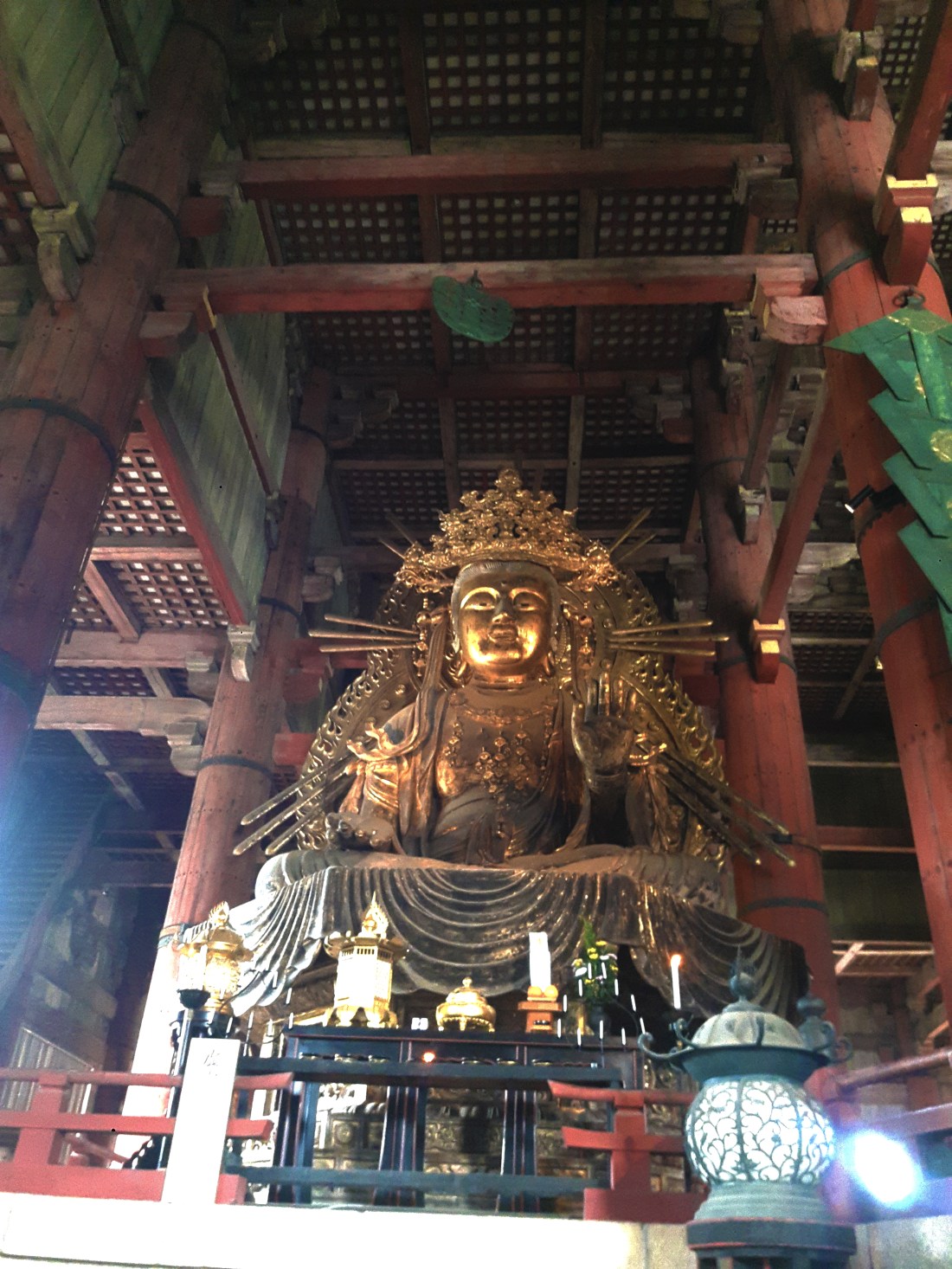
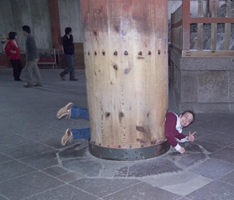
One of the most significant things to try in Todai-ji Temple is passing through the Buddha’s Nostril. It is actually a small square hole inside a wooden pillar. It is widely said that if one can fit through it, the “nostril” will grant that worshiper enlightenment. Initially, I was hesitate to try as I was too afraid of being stuck in the hole then I would be stupid or something haha. But thanks to my peers’ encouragement, I pulled myself together and passed through it quite easily. That precious memory is definitely something of utmost importance to me, which keeps reminding me of courage and success.
Unfortunately, I couldn’t take any photo of the hole, so below are the two pictures I’ve taken from Atlas Obscura to make it clearer about the point:
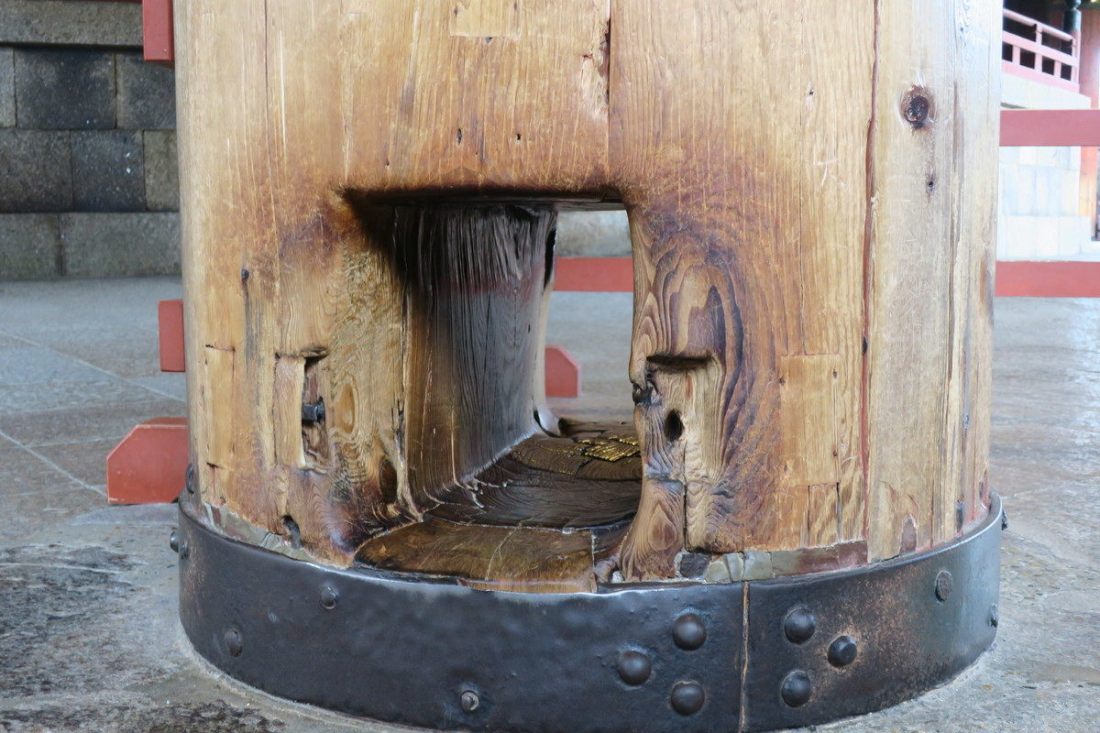
In fact, here is how it looks when there’s someone inside:
OK, so I think it’s high time to take a look outside the main hall. There’s another appealing story to tell about healing power:
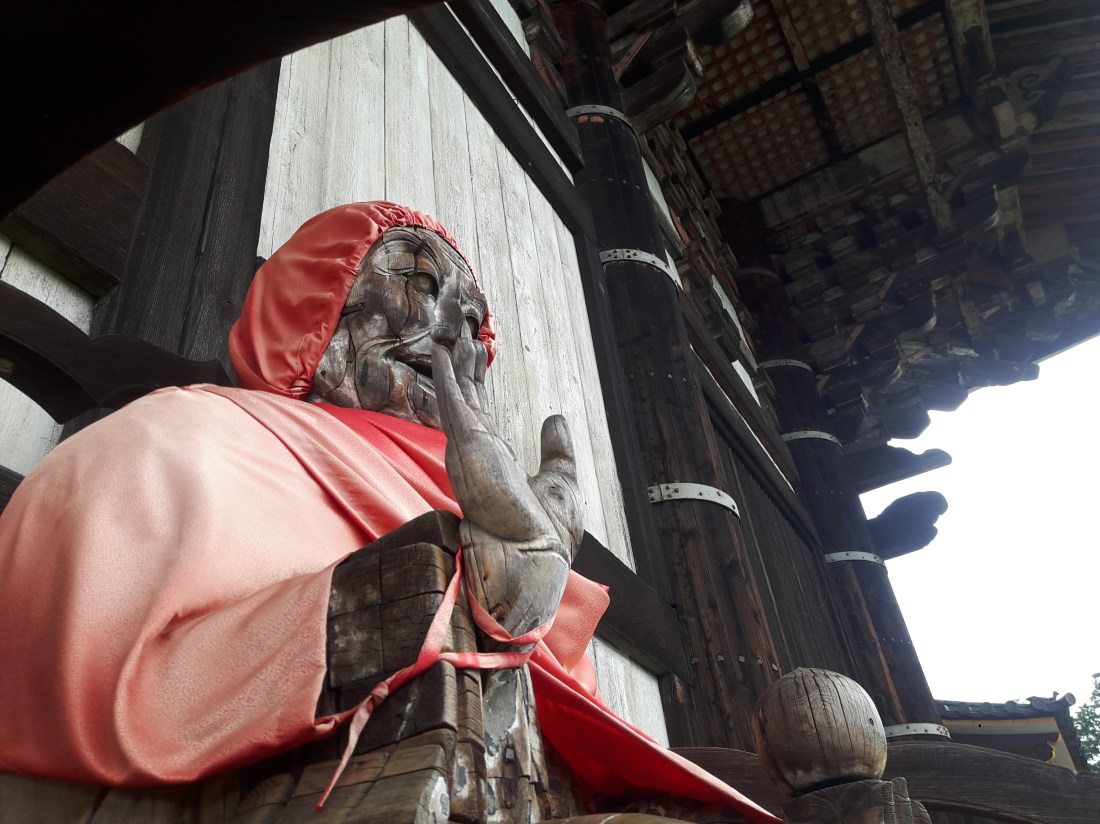
Our tour guide told us about the story of this well worn statue, but I wasn’t able to catch the whole story. I did miss the first part, and all I could hear was that Binzuru wasn’t allowed to go inside for some reasons and he had the power of healing. If you are sad or feeling unwell, touching the statue will remove the pain. For example, when you suffer from splitting headache, you can touch his head, then you no longer feel the pain in your head. That’s how Binzuru’s healing power works. Miracle!
According to Hakusan Creation, there is a legend about Binzuru. He was once asked by the Buddha to help a wealthy man exorcise the evil spirits in his house. Binzuru succeeded, so the man offer him drinks to celebrate. He didn’t want to be rude to the host, and took a drink. The evil returned not long after he got drunken.
Hearing of the news, the Buddha expelled Binzuru from his company. Way too rueful, Binzuru kept following the Buddha everywhere he goes, sitting outside his tent to hear the Buddha’s sermons. Finally, on his deathbed, the Buddha was aware of his loyalty then forgave him. He commanded Binzuru to be a healer. From then on, Binzuru sits outside the Buddha temple so that the worshipers can come to him for easing their suffering: people think that rubbing the part of the statue that corresponds to the ailing part of the body then it will be cured.
Guys, that story of Binzuru is the last part of today post. I’m now working on the other parts, so that I can upload more interesting information and stories to my website!
If you are patient and persistent enough to read till the end of the post, thank you so much! Hope you have a wonderful day!!

 brillbro